How have molecular and developmental mechanisms evolved to shape the diversity of plant forms?
Plant forms have become increasingly complex and diverse during evolution. This morphological diversification is thought to have been driven, at least in part, by the evolution of molecules that regulate development and morphogenesis.
Many people may have heard that floral organs are thought to have evolved from leaves. In contrast, plants can also generate new morphologies by reducing or suppressing the functions of leaves and other lateral organs that were present in their ancestors. In our laboratory, we identified ALOG transcription factors as regulators involved in the reduction of leaves and lateral organs, and have shown how changes in such developmental regulators can contribute to morphological evolution.
In addition, we are interested in molecules involved in body axis formation and cell polarity. By comparing these molecules across diverse plant lineages, from algae to vascular plants, we expect to uncover important differences in how plants build their bodies. Using these differences as clues, we aim to understand how changes in molecular mechanisms have enabled the complexification and diversification of plant morphology.
Our current and future research projects include:
1. Evolutionary processes of the polar auxin transport system
2. Molecular mechanisms underlying the reduction of leaves and lateral organs
3. Evolutionary biology of plant–fungal symbiosis
Learn more about the research
1. Evolutionary processes of the polar auxin transport system
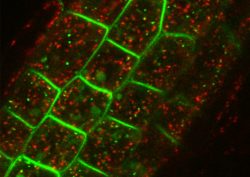
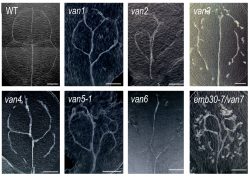
Polar auxin transport plays an important role in plant morphogenesis. For example, during leaf venation pattern formation and organ formation, auxin flow and auxin concentration gradients are generated within tissues, and these patterns are thought to guide cell differentiation and growth direction. In this process, PIN proteins, which transport auxin out of cells, and the molecular mechanisms that regulate their localization play central roles.
Interestingly, molecules involved in auxin and PIN function are also conserved in bryophytes, which do not have complex organs such as roots and leaves. What do plants without such complex organs use this molecular system for? What kinds of molecular changes enabled the evolution of complex body plans and organ patterns in vascular plants?
We study the functions of molecules involved in polar auxin transport by comparing mosses, liverworts, ferns, and seed plants. By analyzing auxin transport, PIN localization, and the regulation of cell polarity during development and morphogenesis, we aim to understand how the molecular basis of polar auxin transport contributed to the evolution of complex plant body forms.
2. Molecular mechanisms underlying the reduction of leaves and lateral organs
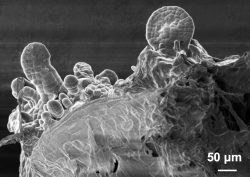
Plants have evolved a wide variety of leaves and lateral organs. Leaves can diversify in size and shape, and they can also be modified into different organs, such as floral organs. At the same time, the reduction or loss of leaves and lateral organs has occurred repeatedly during plant evolution, as seen in plants such as cacti and mycoheterotrophic plants.
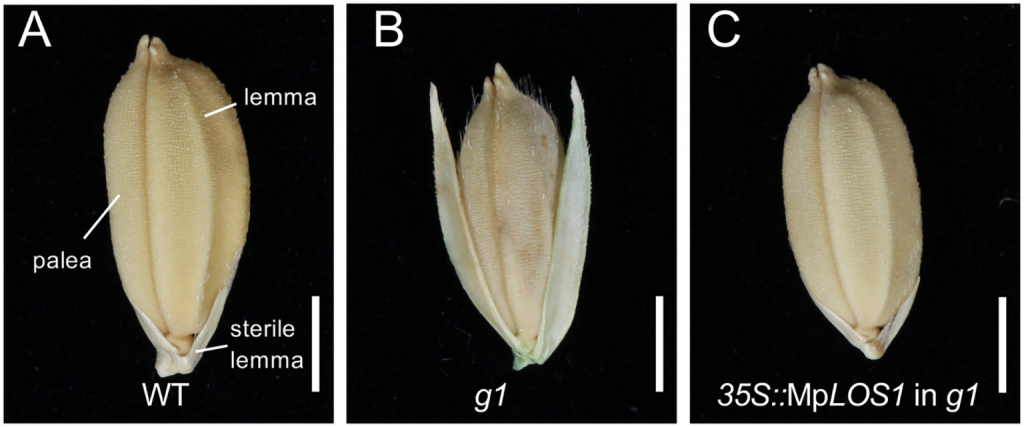
Although many studies have investigated how leaves and lateral organs develop, much less is known about the molecular mechanisms that reduce or suppress these organs. We identified ALOG transcription factors as regulators involved in the reduction of leaves and lateral organs. We have shown that ALOG can suppress cell division and chloroplast development, thereby contributing to organ reduction.
The function of ALOG appears to be conserved in distantly related plants, including the liverwort Marchantia and rice. In future studies, we aim to investigate how ALOG functions in diverse plant lineages that have independently evolved reduced leaves or lateral organs. Through this work, we hope to understand how plants have generated new morphologies not only by making organs, but also by reducing or suppressing pre-existing organs.
3. Evolutionary biology of plant–fungal symbiosis
When plants first colonized land, soils were not as fertile as they are today, and terrestrial environments were likely challenging for early land plants. Symbiosis with fungi may therefore have been important for acquiring nutrients and adapting to land.
Many modern plants obtain nutrients such as phosphorus through symbiotic interactions with fungi. In addition, mycoheterotrophic plants have lost photosynthetic ability and depend strongly on relationships with fungi. Such plant–fungal interactions are important for understanding plant evolution, nutrient acquisition, and morphological diversification.
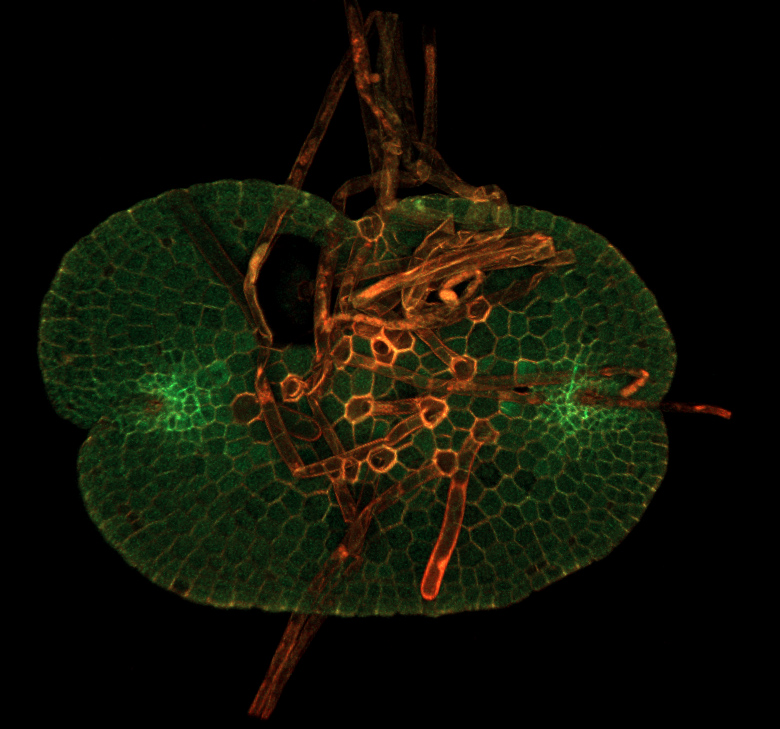
We aim to study the mechanisms by which plants establish symbiotic relationships with fungi, using bryophytes and diverse non-model plants. By comparing these mechanisms with those known in seed plants, we hope to understand how plant–fungal symbiosis evolved and how it contributed to the adaptation of plants to terrestrial environments.