Here are some of the topics currently underway or available for research in our laboratory.
Please feel free to contact us with any inquiries relating to clarifying the mysterious and wonderful abilities of plants and plant cells.

Department of Biological Sciences,
Faculty of Science, Hokkaido University
- Evolutionary and Developmental Biology in Plants
How do plants differ from animals?
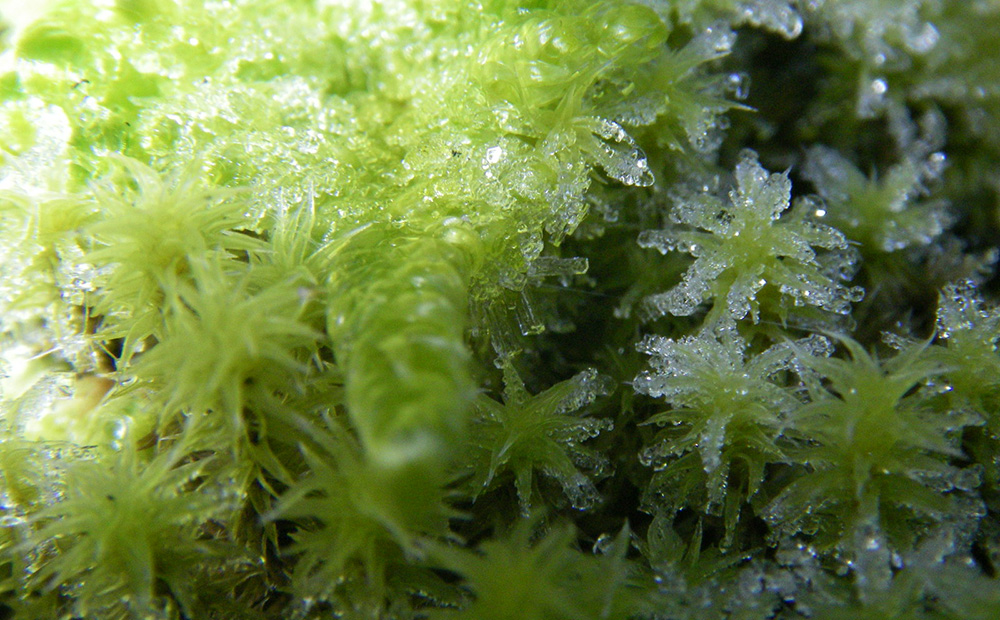
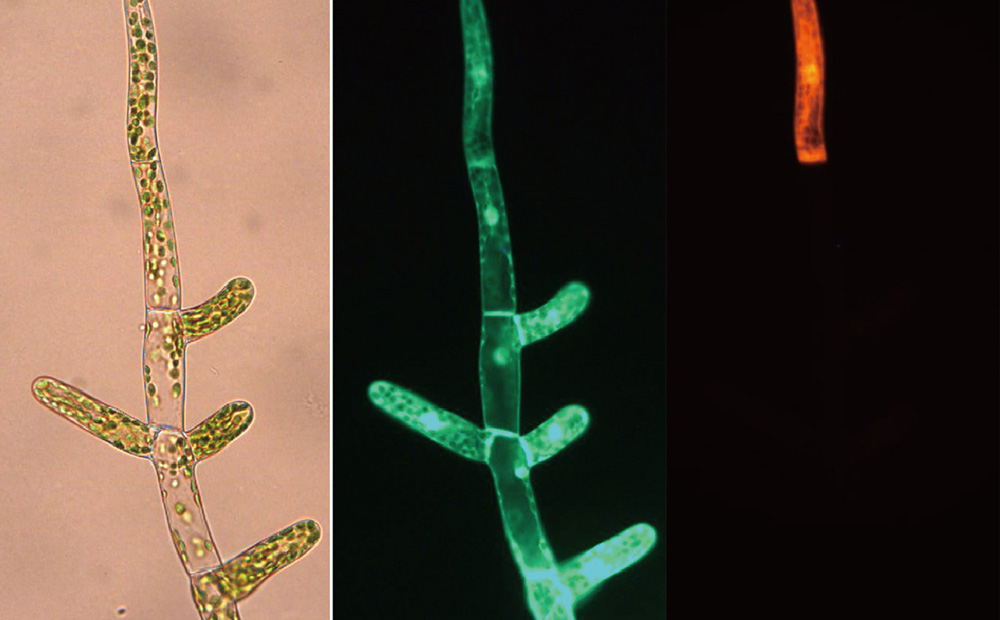
Why do plants have totipotent cells and remarkable regenerative abilities? How do plant cells avoid becoming cancerous, despite their ability to keep dividing infinitely? Can we find a way to apply the hidden potential of plant cells to our animal cells?
Plants support the ecosystem of Earth as primary producers, provide healthful food and healing compounds, and are our indispensable partners. How do plants sense, respond and grow based on changes in their surroundings? How does evolution change their developmental programs and environment adaptation mechanisms? How will plants change in the future?
Our research approaches these question from various angles to examine the control of plant cell proliferation and differentiation and the remarkable abilities of plants to adapt to their environments. We endeavor to find how plants regulate their cell proliferation and specialization to control cell fate. We also endeavor to discover how plants tolerate environmental stresses and to shed light on the crosstalk between plant development and environmental responses. One important goal of studying this crosstalk is developing improved crop plants that can grow well, even in hostile environments.
Our plant research will prove useful in solving some of the problems we currently face as a society, including the need to feed all the people on this planet we share. The members of our group enjoy a fulfilling life as researchers with like-minded friends, and build a foundation for their scientific abilities, career development, and ability to help improve plants, and to help society.
Here, we list our research themes in progress, including possible themes, many of which have deep reciprocal connections to each other.

- plant developmental cell biology
- plant evolutionary and developmental biology
How do plants create such diverse and beautiful forms?
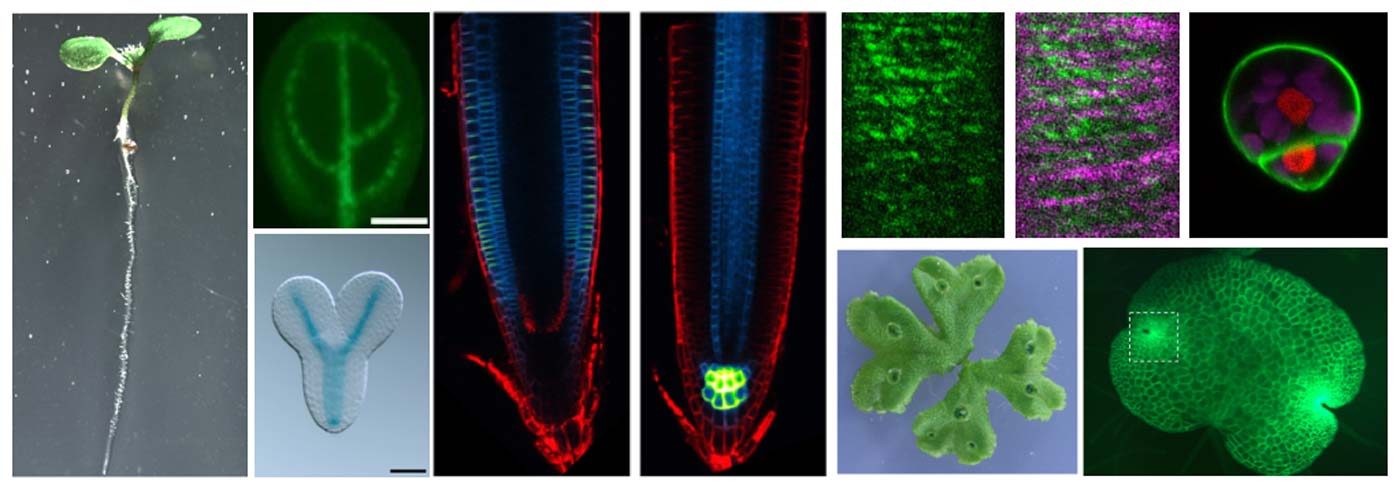
How do plants create such diverse and beautiful forms?
How can plants generate such diverse and beautiful forms?
How do plants, which cannot move away from where they grow, change their body form in response to environmental cues such as light, gravity, drought, and wounding?
And how do plants regenerate damaged tissues and, in some cases, produce new individuals from parts of their bodies?
In the Naramoto Laboratory, we study the mechanisms underlying plant morphogenesis. Plant form is not determined by genetic programs alone. It emerges from the interplay of cellular polarity, plant hormones, intracellular trafficking, the cytoskeleton, membrane organization, and environmental responses.
We use mosses, liverworts, ferns, Arabidopsis, and non-model plants, including mycoheterotrophic plants, to understand how plants establish body axes, coordinate cell behavior, form organs, and adjust their growth in response to the environment. In particular, we combine live imaging and microscopy with molecular genetics, cell biology, plant hormone analysis, AI-based image analysis, bioinformatics, and mathematical biology. Our goal is not only to “see” plant development, but also to measure and understand it quantitatively.
Plant shape is more than appearance. It reflects cellular behavior, hormonal information, environmental responses, and evolutionary history. Studying plant morphogenesis allows us to understand how plants live, grow, and evolve diverse forms in changing environments.
When we observe plants under the microscope, we often encounter phenomena that are not described in textbooks. Discovering such phenomena with our own eyes, asking why they occur, and gradually uncovering the underlying mechanisms through experiments and analysis is one of the most exciting aspects of research.
We welcome motivated students and researchers who are interested in plant development and morphogenesis, live imaging, cell biology, plant hormones, cell polarity, AI-based image analysis, mathematical biology, and non-model plants. No prior specialized knowledge or technical experience in these specific areas is required, but we expect students to have a strong interest in research and a willingness to learn. If you are interested in observing plants, looking at microscopy images, or thinking about how plant forms are generated, you can start from the basics, such as handling plant materials and learning microscopy.